









What is Advanced Moisture Management?
Advanced Moisture Management refers to moisture traveling quickly from the inside of a fabric to the outside (wicking), where it will spread out (dispersion), and evaporate, leaving you cool and dry.
Advanced Moisture Management works by drawing moisture through the yarn fibers to the surface of the fabric where it can quickly disperse and evaporate. Polyester is a popular fabric to apply a wicking finish to because it is naturally hydrophobic and absorbs almost no water. A wicking finish means Advanced Moisture Management.
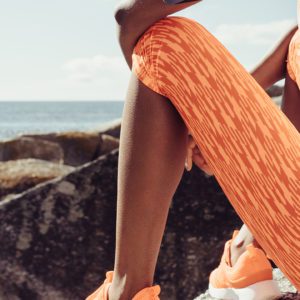
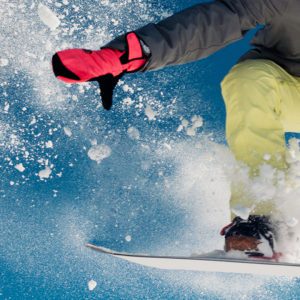
Fabrics with Advanced Moisture Management are perfect for athletic clothing as an outer layer or base layer, and work to keep moisture away from the skin.
How does Advanced Moisture Management Work?
After the greige goods have been dyed, a proprietary chemical finish is applied to the fabric. This finish works as a catalyst to speed up the process of wicking, dispersion, and evaporation.
Moisture is pulled from the inside of the fabric to the surface through channels in the fibers via capillary action. Once on the surface the moisture will disperse, allowing it to evaporate quickly. The faster it spreads out, the faster it can evaporate. This keeps you dry and comfortable during physical activity.
Synthetic fabrics are frequently used for wicking finishes because they naturally do not absorb much moisture. Polyester is extremely hydrophobic, which allows the wicking finish to be effective in drawing moisture to the fabric surface without being absorbed.
The Advanced Moisture Management 3-Step Process – Wicking, Dispersion, and Evaporation
- Wicking: Moisture is absorbed into the fabric through capillary action
- Dispersion: After the moisture is absorbed, it is quickly dispersed across the fabric in all directions.
- Evaporation: Air flows through the fabric to dry it as fast as possible
Can Natural Fiber Fabrics Have Advanced Moisture Management or Wicking?
Wool is actually moisture wicking, even though it’s a natural fiber fabric. Wool absorbs moisture but also wicks moisture through small openings in the fibers. That’s why wool can get wet but is still dry on the outside.
Cotton, on the other hand, is highly absorbent and does not wick moisture at all. Cotton clothing would be the last choice if you wanted to stay dry during a physical activity.
What Factors Affect Moisture Management?
The speed and efficiency of moisture transport in fabrics is dependent on:
- Fabric construction
- Yarn anatomy (spun or filament)
- Yarn size
- Number of filaments in the yarn
- The fabric weight
How do Microfibers Help with Wicking?
Not only do microfibers give fabric a softer hand, they help with moisture management. The tinier fibers are, the more channels to quickly wick moisture via capillary action. The moisture is then quickly dispersed across the fabric’s surface and evaporates. Microfibers are fibers that are less than 1 denier in size. For reference, a strand of silk is about one denier and about a fifth of the diameter of a human hair. One downside to microfibers is that they tend to snag more, depending on the type of knit.
What Test is Used to Measure Wicking?
The Vertical Wicking Test (AATCC 197) is a test that is frequently used to measure how quickly a fabric can wick moisture vertically. It is also knows as the Vertical Absorption Test.
What Applications are Best for Fabric with Advanced Moisture Management?
Fabrics with Advanced Moisture Management are great for any physical activity. They’re also effective as a base layer during cold weather. When TVF designates a fabric with a “Wicking” finish this is actually Advanced Moisture Management. TVF has many popular apparel fabrics with a wicking finish that are also perfect for dye sublimation printing.
- 84/16 Polyester Spandex Semi Matte Tricot, Wicking Finish
- Polyester Micro Fiber Birdseye Flatback Mesh, Wicking Finish, 2A Wash
- Polyester Micro Fiber Woven Twill 2-Way Stretch, Wicking Finish
- 77/23 Full Dull Polyester Spandex Tricot, Wicking Finish, Anti-Microbial
- Polyester Micro Fiber Light T-Shirt Jersey, Wicking Finish
- Jennifer, 88/12 Polyester Lycra®, 4-Way Stretch, PFP, Advanced Moisture Management Wicking Finish, Made in USA,
What are the Care Instructions for Apparel with a Wicking Finish?
It’s important not to use softeners of any kind. The wicking finish is typically effective for at least 25-30 washes unless softeners are added to the fabric by the consumer. Softeners will clog the wicking process and stop the moisture from spreading.
Wicking FAQ
Some of the most typical questions we are hear from customers about wicking and advanced moisture management are detailed below – let us know if you have others!
- How long does the wicking finish last?
A wicking finish typically lasts at full strength about 30 washes but can still be effective through the life of the garment if no softeners are used during washing or drying
- Can I use a water repellent in addition to a wicking finish?
No, a water repellent counteracts a wicking finish; they are not used at the same time
- Does a wicking finish affect a fabric’s printability?
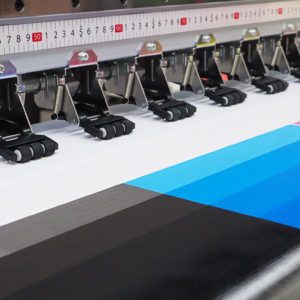
A wicking finish does not affect a fabric’s printability – TVF’s polyester fabrics with wicking are perfect for dye sublimation.