


















For the founder of Tennessee-based Polar Skin™, the ideal fabric for his lifesaving, portable rapid-cooling system that treats heat-related illnesses requires more consideration than performance alone. “When I started the business, one of the goals was actually to produce it and manufacture it in the United States,” President Russ Hubbard recalls of his journey to develop Polar Skin™ “from the get-go, from the ground up, because somebody told me I couldn’t.”
To get there, he needed a material that could be saturated with liquid that was lightweight, moisture-wicking, packable, and able to be easily carried into emergencies. It also needed to serve the primary purpose that inspired Russ to develop Polar Skin™: the warfighters of the United States Military. Textile manufacturing has shifted away from the U.S. in recent decades, and Russ wasn’t even sure if the type of fabric he needed for Polar Skin™ could be made from fiber to finish here. Russ could source the freezable, storable fluid, the packaging, and the labor in the U.S., but “the one aspect that we could never quite get to was the textile.”
Russ, a service-disabled Army veteran, reached out to TVF, adding that early on, “what I didn’t know about textile science could fill volumes.” He also needed to brush up on the stringent manufacturing and procurement standards that governed clothing, fabrics, fibers, yarns, and other products made for the U.S. Department of Defense (D.O.D.) called The Berry Amendment. TVF has partnered with D.O.D. contractors for decades. In short, these rules demand that anything used by the government for the defense of the nation had to be “grown, reprocessed, reused, or produced” in the country. No exceptions.
To advance from the early, proof-of-concept stages to be able to scale up, Russ needed to shift from one fabric that didn’t meet Berry compliance, 4.3 oz. Polyester Microfiber Birdseye Flatback Mesh, to one that did. He connected with TVF Senior Sales Consultant Chris Russo.
“It’s great who he chooses to tie into this particular process,” Chris says, “It’s something that he can be proud of… It’s a USA-made product by people here, and it’s a great story.”
He adds that products manufactured overseas may be cheaper in some cases, but “Russ is not choosing to go that way. He’s choosing to keep it here for his story, for his reasons. And I think those have been proven to be the right reasons.”
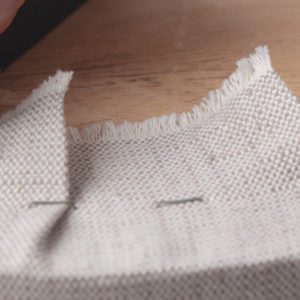
Russ and Chris zeroed in on 3.5 oz. Polyester Spitfire fabric by TVF. Ordinarily used for cycling jerseys, polo shirts, and activewear tops, Spitfire’s fine weave and no-hole mesh construction proved higher performing and lighter weight than the predecessor, Birdseye Flatback Mesh.
The idea for Polar Skin™ was sparked during Russ’s time serving in the Army. He watched fellow soldiers he trained with or fought with drop out – or worse – during high-heat situations.
These dire scenarios played out frequently enough that Russ used what he had on-hand (cotton bedsheets that were frozen and kept in a cooler) to improvise his own safety kit.
While his method worked in a pinch, it was bulky, resource-intensive, and not always feasible in battle or training zones. “Basically, we were looking for the characteristics in a fabric that were probably opposite of what anybody else would look for,” Russ says. “We basically want a material that can hold as much fluid as physically possible.” While most fabrics, including the military-issued bed sheets, will hold fluid, Polar Skin™ includes the added demands of managing and moving heat and moisture from the surface of a victim’s skin. “And that’s a very good thing because that means that the evaporation’s high and you’re dumping excess heat,” he added.
Through extensive laboratory testing, Russ says the swap to Berry-compliant Spitfire made sense on multiple fronts. “That gets into the weave of the material and how it’s spun, and then the processes that we put it under here” like vacuum technology. “Not only do you have the material itself with a wicking capacity that we need, but now we can drive the fluid even further into the material.” Russ says that Spitfire can carry some four-times as much liquid volume as the cotton material he carried in a lunch cooler onto a dessert battlefield.
An additional benefit of going Made in USA and Berry-compliant? A tighter supply chain. After Spitfire is manufactured, it ships from TVF’s climate-controlled warehouse in Lebanon, Indiana to a conversion company in Kentucky. The fabric, now cut to size, continues south to the Polar Skin™ headquarters in Kingsport, Tennessee where it’s packaged before it ships to be distributed by North American Rescue LLC in Greer South Carolina. A loop that takes about 9 hours on the road.
“TVF’s in-stock fabric selection really made this one much easier to get off the ground as opposed to a full customer spec from everything out to the end,” says Chris. “We have to scale with the businesses that we serve. If they scale and they move into different sectors and different facets of the world, we need to make sure we’re there to help him out along the way. And that’s where this Berry compliance stuff helped him do totally Made in USA, helped his domestic supply chain. And this is a business owner taking an idea and putting in the legwork to bring it to life. And now he’s saving lives.”